


According to medical statistics, approximately 80% of people experience periodic back pain.It has a different character: it hurts, sharp, radiates to the lower extremities.Most often, people between 30 and 55 years old complain of pain.
There are many causes of pain in the lower back and not all of them are related to pathologies of the musculoskeletal system.If the discomfort appears regularly and reduces the quality of life, then you should visit a doctor who will help identify its cause.After adequate therapy, it will disappear on its own.As a rule, you can get rid of pain using conservative methods, but in advanced cases surgery is necessary.Preventive measures will help maintain back health and prevent pain.
Causes of back pain
The question of why the lower back hurts is quite important.The human spine is a complex structure consisting of vertebrae, discs between them, spinal cord, nerve roots and surrounding tissues (muscles, ligaments, tendons).When problems arise with any of these components, back pain occurs.Although in some cases, discomfort in the lumbar region occurs due to the breakdown of other organs.
Sprain is one of the most common causes of lower back pain.Discomfort occurs when muscles, ligaments or muscle spasms are damaged.The causes of sprains can be the following human actions:
- Improper lifting of an object.
- Lifting weights.
- Sudden movements.
Disruption of the structure of the spine is another common reason why the lower back hurts.Low back pain associated with structural problems is often caused by the following diseases:
- Intervertebral disc fracture.When the integrity of the disc is compromised, the compression on the nerve bundles increases, which manifests as pain.
- Protrusion (bulging of a disc between the vertebrae without rupture of the fibrous ring) or intervertebral hernia.Then the pressure on the nerve bundles in the lower segment of the spine increases and severe pain appears in the lower back.
- Sciatica (compression or inflammation of the sciatic nerve) often occurs due to a bulging or herniated disc.The pain then spreads from the lower back to the back of the thigh.
- Arthritis of the lumbar region.
- Scoliosis is a disease in which there is a lateral curvature of the spine.
- Compression fractures (damages to the vertebrae due to compression) of the lumbar region can also cause severe pain.
- Osteoporosis is a pathology in which bone density decreases and vertebrae become porous.This disease increases the risk of compression fractures.
In addition, pain in the lumbar region can be caused by the following reasons:
- Cauda equina syndrome is damage to the group of nerves that exit the terminal part of the spinal cord.Then a dull pain appears in the lower back, in the upper part of the buttocks, sensitivity in the pelvis is impaired, control over urination and defecation disappears.
- Spinal tumors can press on nerves, causing pain.
- Spinal infections (osteomyelitis, discitis, tuberculosis of the spine) provoke pain, fever and hyperthermia in the lower back.
- Infectious diseases, for example, cystitis or inflammation of the kidneys (glomerulonephritis, pyelonephritis, urolithiasis) also cause pain.
- Herpes zoster is a viral disease that can damage the nerve bundles in the lower back.
In addition, pain in the upper lumbar region can occur with an atypical course of pancreatitis (inflammation of the pancreas).Discomfort often occurs due to sleeping disorders or resting on a weak mattress that does not support the spine well.
Everyday activities also cause lower back pain:
- Sitting for a long time in an uncomfortable position.
- The person often pushes or pulls something.
- Lifts or carries objects.
- When you stand for a long time, your back also hurts.
- Prolonged bending or frequent turning.
- Excessive tension or overstretching of the muscles in the lower back.
Severe discomfort in the lower back appears with prolonged tension in the neck, which is directed forward, for example, if a person is sitting at the computer or driving a car.
Reference.Lumbago is an acute pain that occurs when the back is too cold or under dynamic loads.Lumbodylia is a painful sensation and pain caused by prolonged static loads.Lumboischialgia is a pain syndrome that spreads from the lower back to the legs due to an intervertebral hernia.
Risk group
Most often, back pain is provoked by the following factors:
- frequent stress;
- pregnancy, which is associated with an enlarged uterus and tension of its ligaments;
- prolonged sitting associated with work characteristics;
- old age and accompanying changes in the spine;
- mental disorders;
- excess body weight;
- smoking;
- hard physical work.
Reference.According to statistics, women suffer from discomfort in the lower back more often than men.
The possibility of back pain increases after long-term use of steroids, drug addiction and in patients between the ages of 30 and 55.
Symptoms
If you have pain in the lower back, then pay attention to the nature of the pain;it can be sharp, dull, aching, burning.Sometimes unpleasant sensations such as tingling and numbness appear.Pain in the lumbar region can spread to the buttocks, the back of the leg to the foot.The severity of the pain syndrome also varies: from mild to unbearable, which does not allow movement.
Often the patient can experience pain in the lower back due to kidney pathologies.To determine if this feeling is caused by a kidney problem, pay attention to your symptoms.With kidney disease, the pain is not accompanied by physical activity, there is a fever (from 37.5°), urination is impaired and the urine becomes cloudy.When you touch the kidney area, severe pain occurs.
As mentioned, atypical forms of pancreatitis can also be accompanied by severe pain in the lower back.
With osteochondrosis, aching pain appears, which radiates to the leg, intensifies when walking, and sometimes "lumbago" occurs.Over time, the sensitivity of the lower part of the body (buttocks, hips, legs) is damaged.The lower limbs freeze quickly and sweat production is impaired.There is no fever with osteochondrosis.
With neuralgia, the pain spreads along the affected nerve.The pain is sharp, burning, appears quickly and suddenly subsides.The color of the skin in the affected area changes, sweating increases during an attack, and muscles tremble.
You should seek medical help if you have back pain and at least one of the following symptoms:
- weight loss;
- increase in temperature (from 37.5°);
- swelling in the waist area;
- the pain does not subside even when the patient is lying down;
- the pain radiates to the leg;
- you have recently injured your lumbar spine;
- control over urination and defecation is impaired;
- the sensitivity of the hips, buttocks or legs is impaired.
To understand what exactly is wrong and what are the causes of discomfort, do a medical examination.
Diagnostic measures
If your lower back hurts, you should see a therapist or orthopedist.If you suspect neurological disorders, see a neurologist.Physiological examination and medical history are often helpful in making the diagnosis.
If injuries, diseases of the spine or other organs or neuralgia are suspected, the doctor prescribes instrumental studies:
- X-rays will help identify lumbar injuries, inflammation of the vertebrae, and imbalances in the elements of the spine.
- Magnetic resonance or computed tomography will show intervertebral hernia, structural disorders of the spine, problems with surrounding tissues (nerves, muscles, blood vessels).
- Bone scintigraphy is used to detect bone tumors and compression fractures.During the study, a radioactive drug is used, which is injected into a vein and then accumulates in areas with increased metabolism.
- Electroneuromyography is effective for identifying compression of nerve bundles that occurs against the background of intervertebral hernia or spinal stenosis.This diagnostic method allows you to identify any damage to the neuromuscular system.
If an infectious disease is suspected, the patient will be prescribed laboratory blood tests.
If the doctor suspects that the pain in the lower back is caused by problems with the kidneys, pelvic organs or pancreas, then a set of appropriate tests is prescribed.
Conservative treatment
If you do not know how to get rid of back pain, then first consult a doctor.With timely diagnosis, treatment is carried out at home.Over-the-counter pain relievers are used to relieve pain.
Patients should know how to relieve pain if it strikes them by surprise.If the discomfort is caused by osteochondrosis, then you should act according to the following plan:
- warm the lower back with a scarf or wool belt;
- lie down on a hard surface;
- take NSAIDs;
- treat the back with anti-inflammatory ointment.
Carefully.Do not take NSAIDs if you have problems with your digestive organs, as they damage the mucosa.

NSAIDs and antispasmodics will help relieve neuralgia pain.In addition, complete rest must be observed.If the pain is very strong, then the patient should be hospitalized.
If you have lower back pain caused by kidney disease, you should urgently call an ambulance.The patient should lie down and take antipyretics (antipyretics) and antispasmodics to normalize the temperature.It is necessary to check blood pressure and body temperature whenever possible.Further actions are performed by the doctor.
Carefully.It is strictly forbidden to use warm compresses or take a hot bath if you have inflammation of the kidneys!
Pain in the lower back due to inflammation of the pancreas (atypical form) is very strong.During an attack, you should call a doctor.Before the doctors arrive, you are not allowed to eat;you need to take a comfortable position and drink water in small sips.It is advisable to have someone with the patient.The knee-elbow or fetal position will help reduce discomfort.
Regardless of the cause of the pain, the patient should rest for 1 to 2 days.Longer rest threatens to weaken the muscles, then episodes can be repeated more often.
Acute lower back pain comes on suddenly and lasts up to 12 weeks.Constant pain during the chronic process develops slowly and continues for 3 months or more.Many patients present with acute and chronic pain, making diagnosis very difficult.
If home treatment for low back pain is ineffective, doctors prescribe prescription NSAIDs to patients.Narcotic pain relievers, such as codeine or hydrocodone, relieve severe pain.However, these drugs are used only in extreme cases and the doctor must monitor the patient's condition.To relieve symptoms, your doctor may prescribe antidepressants, such as Amitriptyline.
The treatment can be supplemented with physiotherapeutic procedures.Electrophoresis, ultrasound, electrical stimulation, magnetotherapy, etc. have an excellent therapeutic effect.These procedures help speed up metabolic processes, blood circulation, improve tissue trophism, accelerate the healing of damaged areas and relax spasmodic muscles.
Therapeutic exercises can help strengthen muscles and ligaments, make them more elastic and correct posture.The complex for each patient is compiled by a doctor, taking into account age, symptoms, cause of pain and general condition.Training should be carried out in the phase of remission, when the pain syndrome decreases.With regular exercise, the patient will be able to prevent repeated attacks.
Cortisone (a synthetic corticosteroid) injections will help relieve pain if the above methods are ineffective.After the procedure, inflammation decreases and discomfort disappears.The therapeutic effect lasts 6 weeks.
The following methods can help relieve pain and improve your general condition:
- Osteopathy helps restore the structure of the musculoskeletal system using only the doctor's hands.
- Chiropractic is a manual technique for correcting spinal defects.
- Acupressure – impact on energy points with the fingers and elbows of a specialist to eliminate discomfort and relax muscles.
- Reflexology is the insertion of special needles into the biologically active points of the body.After the procedure, endorphin production is stimulated and pain is reduced.
- Yoga.When you perform certain poses and movements, the muscular core is strengthened and posture is improved.However, the exercises should be performed under the guidance of a specialist, otherwise the pain syndrome may intensify.
The decision on how to treat lower back pain is made by the doctor after a complete diagnosis and identification of the causes of the discomfort.
Surgical intervention
The question of what to do if your lower back hurts continuously for a long time (more than 6 months) is quite important.In this case, doctors may prescribe surgery.As a rule, surgical intervention is indicated for intervertebral hernia, especially if the disease is accompanied by neurological disorders (numbness of hips, legs, involuntary urination, defecation).
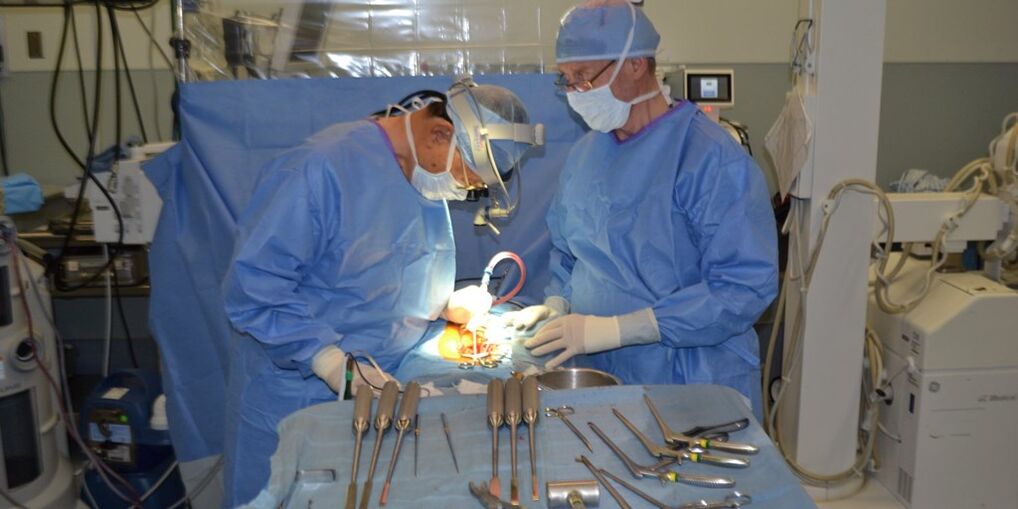
The following surgical techniques will help to cure serious diseases of the lumbar segment of the spine, which are accompanied by pain:
- Spinal fusion is an operation to fuse two or more adjacent vertebrae, between which an implant is inserted.The unstable elements of the spine are fixed with special fixing materials (metal plates, screws).
- Intervertebral disc replacement.During the procedure, the destroyed disc is removed and an artificial one is placed in its place.
- Discectomy is the removal of a portion of the disc that is compressing a nerve bundle or spinal cord.
- A laminectomy is the removal of a vertebral arch that is compressing the nerve roots that exit the spinal cord.
There are many more surgical techniques that will help stabilize displaced vertebrae, release nerve bundles and other tissues from compression, and restore spinal functionality.
Back pain prevention
To prevent pain in the lumbar region, you should follow these rules:
- Perform exercises to strengthen your muscles and develop flexibility.
- Stop smoking, as people with this bad habit are more likely to have back pain than their non-smoking peers.
- Control your weight and eat right.
- Watch your posture when standing or sitting.
- If you sit a lot at work, then get up every 2 hours and do back exercises.
- Set your workplace correctly, buy a chair with an orthopedic back.
- Sleep on an orthopedic mattress.
- When lifting heavy objects, shift the weight from your back to your buttocks and legs.
- Wear orthopedic shoes.
These rules will help maintain the health of the back for a long time.
The most important thing
As you can see, back pain can occur for various reasons: sprains, structural disorders, cancer, infectious diseases of the spine, daily activities, poor posture, etc.The risk group includes patients who lead a sedentary lifestyle, perform heavy physical work, are overweight, often experience stress or have bad habits.If the pain syndrome is accompanied by fever, swelling in the back or neurological disorders, then you should urgently seek medical help.Treatment tactics depend on the cause of the discomfort.More often conservative methods are used.Surgery is prescribed if the pain does not go away for a long time or if there are neurological disorders.Remember that back pain is easier to prevent than to treat.